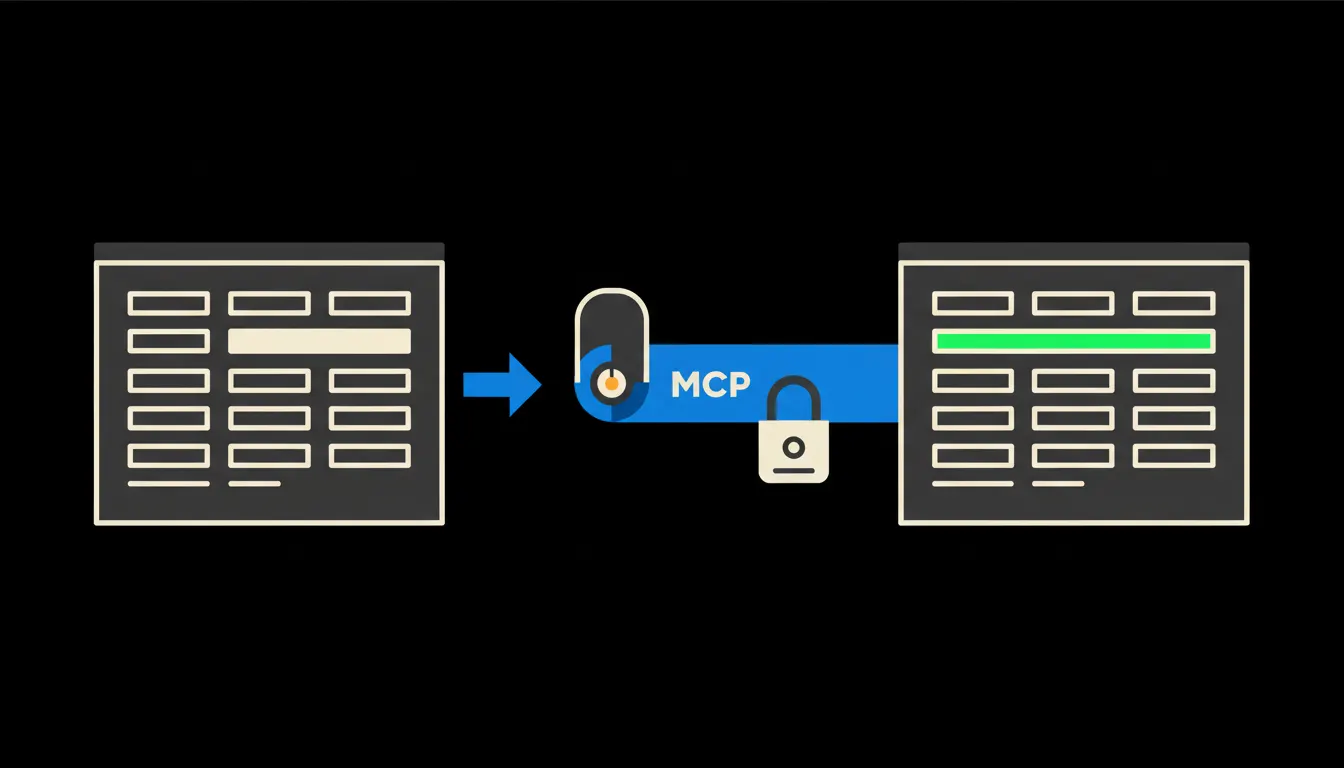
When someone searches for what can be done with the company data sitting in a business bank account, it is rarely idle curiosity. It is the end of the month, a downloaded statement and somebody staring at a spreadsheet. And yet the account is the most accurate thing you own about your own company. It does not round up, and it knows about a problem before the reporting does.
The work nobody wants
The scene repeats every month. Someone logs into the bank, downloads the statement, opens it in a spreadsheet and starts matching. This payment is a deposit from a customer you recognise by the reference number. This one is from a customer who left the reference blank, so you match it by amount. This is a refund, this is insurance, this is a materials purchase that belongs to an invoice from last month.
For a company with a few hundred movements a month, that is half a day, and nobody enjoys it. The worse part is what you do not learn along the way. That one customer now pays two weeks later than last year. That transport costs crept up over the quarter, unnoticed because they arrive in small amounts. That there is cash sitting in the account with nothing to do.
The account knows more about the company than any report. Nobody ever asks it a question it could answer.
— A closing day, abridged
What connecting the bank actually means
It does not mean Claude gets access to your money. It means a small, tightly scoped bridge appears between your banking data and Claude: an MCP server. It does one thing, it reads account movements, and nothing else. It does not send payments, does not change limits, does not copy statements to somebody else"s server and does not create a second database nobody remembers a year from now.
The second half of that sentence matters just as much. The bridge runs under the identity of the person asking. The owner asks, the owner sees the whole account. Someone in sales asks, they see movements for their own customers and nothing more. All of it runs on your infrastructure, in your tenant, with a single record of who asked for what.
Concretely: the statement and invoices in Pohoda
Nothing you use today changes. The account stays where it is, at Air Bank, Fio, Ceska sporitelna or Komercni banka. Invoicing stays in Pohoda or Fakturoid. One thing is added: a bridge that reads both ends and puts them side by side.
How you reach the movements depends on the bank. Some publish a documented business API with a token, some are reached through PSD2 account access, which in the Czech Republic sits under the payment services act and is supervised by the central bank. The simplest route skips interfaces entirely: a bank can issue a machine readable statement every day, camt.053 under ISO 20022 for example. For a small company that is usually enough.
- Matches incoming payments to issued invoices even when the reference number is missing, and flags the uncertain ones instead of guessing.
- Writes out what is still unpaid, for how long and by whom, in sentences rather than an eight column export.
- Notices recurring charges nobody cancelled: licences, subscriptions, a service left running after a project ended.
- Answers questions like how much actually came in this year from our three largest customers and how their payment behaviour changed.
- Prepares the accountant"s list: movements with no matching document.
Picture a three person company issuing a few dozen invoices a month. The owner does the matching at the weekend, because during the week there is no quiet hour for it. If instead he asked on Monday morning what came in since Friday and what is missing against it, the answer would take a minute and he would keep his weekend. This is an illustrative example, not a measured case. The shape of the work is familiar to anyone who watches their own account.
What AI will not do with a bank account, and why that is good
It will not send money. We recommend holding that line even at the moment it occurs to you that it could technically be done. A payment order is a legal act and the signature on it belongs to the person who answers for the company.
It will not decide who gets extended terms and who gets a reminder either. It can hand you the complete picture: who, how much, how long, what the payment history looks like. The decision is commercial and it stays with you. Precisely because the scope is this narrow, the bridge can go live quickly. You never have to think about what happens if the AI gets a transfer wrong, because it makes no transfers.
What it would take
A short call where you tell us which bank holds the account, where invoices are created and who is allowed to see what. That gives us a scope measured in days, not months. The server runs on your infrastructure, the credentials stay with you, and we never need to see them. If a month later you want the CRM or Drive next to the statements, the next bridge goes into the same environment rather than becoming another separate tool.
What is left
The model is not the bottleneck. Claude could have answered your cash flow question long ago if it could reach those numbers under the right identity. The bottleneck is the distance between the model and the data your company already has: the statement at the bank, the invoice in Pohoda, the email with a complaint, the spreadsheet one person maintains. That distance is what we close.
If your company has an account someone downloads by hand every month, that is a good first bridge. Write to us. Half an hour on a call is enough for us to say what can be connected and what cannot.