In a second-hand or antique shop, every item in stock is different, taken in once, often on consignment, and never reorderable. A customer calls: "Do you still have that Tesla record player that was in the window last week?" And here begins what an e-shop with catalogue SKUs never faces: someone has to walk the shelves or page through records, because "how many units" means nothing here: it's either one or none. The data is there the whole time. It just can't be asked a question.
The work nobody wants to do
A shop assistant at the counter knows the customer is waiting. They need one thing: is that specific piece (a typewriter, an L-size bike, a painting from an estate lot) still in stock, or already sold or reserved? They'd open the records, but only the owner has access. They message them. The owner is out collecting goods. The reply comes an hour later. The customer has already left.
That's not an exception. It's a structure that emerges naturally: the business holds a warehouse full of one-of-a-kind pieces, the records are kept by description rather than catalogue number, and they're reachable only by someone who holds the login to a specific module of a specific software, and who happens to have a moment to open it. The database exists. The data is current. But only a couple of people can query it.
"We know where it is. We just can't say it quickly."
— A bazaar owner on the daily grind at the counter
What connecting inventory to Claude actually means
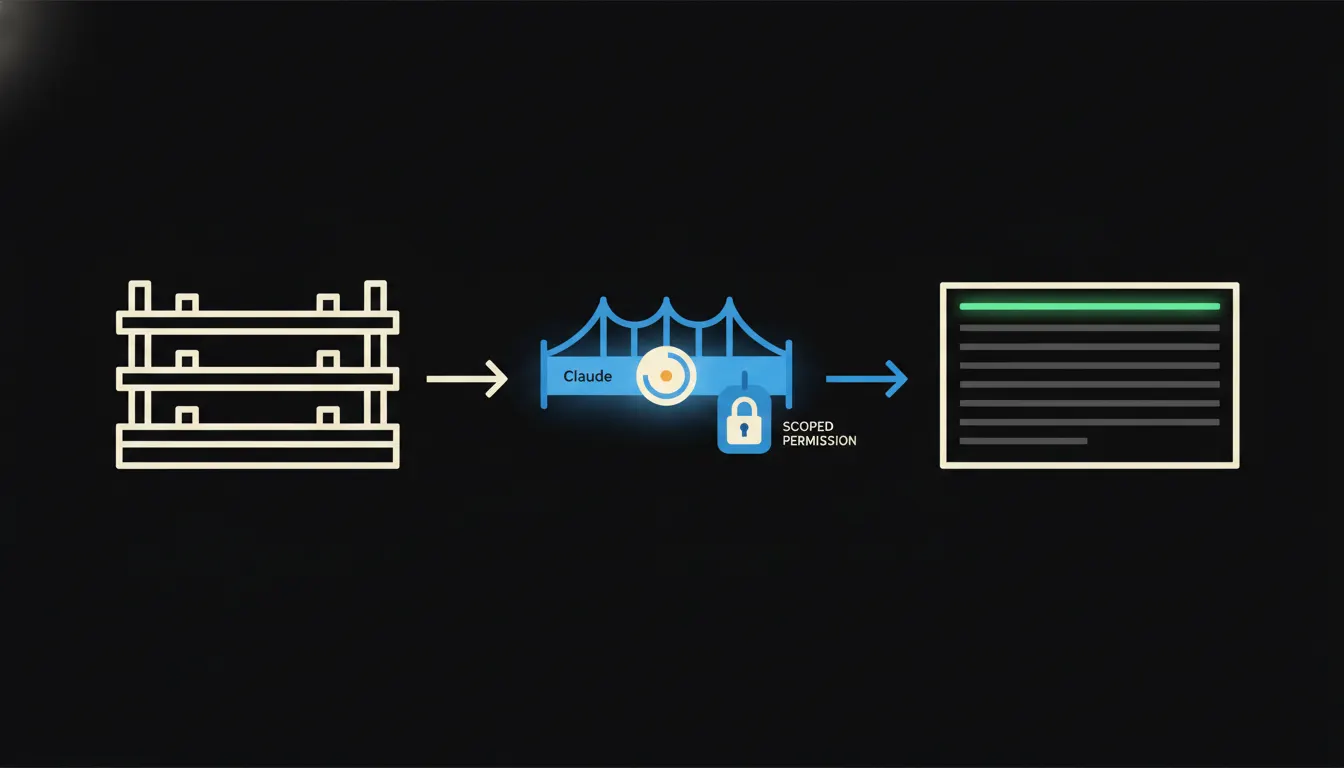
One MCP server sits between your stock system and Claude. When a colleague asks (in a company chat or directly in the AI stack interface) whether a specific piece is in stock, Claude queries the records via the MCP server, receives the answer, and renders it as a plain sentence. No export, no walking the shelves, no wait.
The key detail is that the MCP server carries the logged-in user's identity. Claude sees exactly what that person would see if they opened the system themselves. A part-timer at the counter sees what's in stock and its price, not the consignment terms or how much of a sale goes to the consignor. The owner sees the full picture. The rules you have configured in your system remain in force.
Concretely: Pohoda and Money S3
Pohoda by Stormware is the most widely used accounting and inventory software among Czech SMBs. It provides an mServer API: an interface through which stock cards, movement history, reservations, and price groups can be read programmatically. Money S3 by Solitea offers comparable XML and REST interfaces. In a record of one-off pieces, each item tends to be its own stock card, and that is exactly what an MCP server can be asked about: once, with the querying user's permissions. Nothing is stored separately; no copy is made.
- Whether a specific piece (by description, brand, or record number) is still in stock or already sold
- A list of consigned items that have been sitting longer than a set period
- Reservations tied to a specific customer
- The history of a single piece: when it came in, from whom, for how much, whether and when it was sold
- A search by attributes (type, size, condition) rather than by catalogue number
A second-hand or antique shop with a thousand unique pieces could have the answer on hand instantly, without anyone stepping away from the counter. Walking the shelves becomes one question to Claude. That kind of saving shows up in a week, not a quarter.
What AI inventory access will not do, and why that's the right call
Claude does not manage stock. It does not take a piece in on consignment, issue it, reverse a receipt, change a price, or create a reservation. All of those actions require a person with the right permissions in the system, a person who is accountable for them.
That is precisely why this setup can be trusted. The bridge is read-only: data is available for querying, not for modification. If the business later wants to enable write operations (for example, automatically marking a piece as sold or reserved straight from a query), that is a separate capability, deployed consciously, with explicit approval and a full audit trail.
What it would take
This is not a year-long project. An MCP server for Pohoda or Money S3 is built on the existing API interfaces those systems already expose. The entire infrastructure runs on your own cloud instance, not on a third-party server, not in a shared environment. Every query is recorded in an audit log: who asked, when, what for, and what Claude answered.
What's left
The model is not the bottleneck. Claude can handle numbers, context, and conditions, and it could do so well today. The problem is that it has no access to your data. Your inventory is in your system, behind your credentials, in a format Claude cannot see. That's the gap. We close it.
Write to us: a short call is enough. Tell us which stock system or records you use and who in your company needs access. We'll outline how the bridge would be built, what it would require, and what it would not. No assumptions, no year-long commitment.