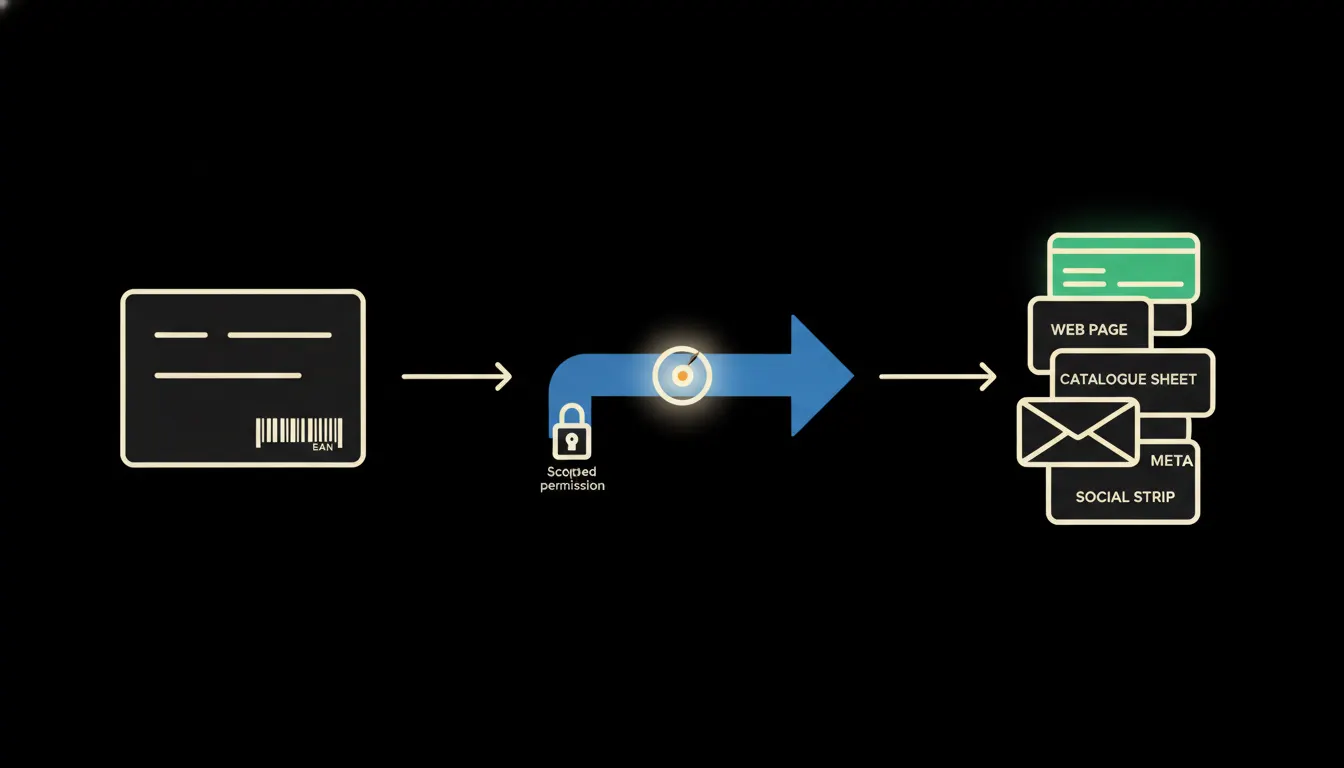
A new product is in the e-shop warehouse. The supplier sent a technical sheet. Now the second job begins — rewriting the parameters into five different places, each in a different register, each a different length. The website wants an SEO description. The catalogue wants a terse list. Instagram wants a story. The newsletter wants one paragraph. The meta tag wants exactly one hundred and fifty characters. None of this is a creative challenge. It is translation.
The work that keeps repeating
The marketer opens the technical card. Reads the dimensions, weight, material, EAN. Opens the shop admin and starts writing. Short description — one hundred and fifty characters. Long description — four hundred words, must include keywords. Meta description — different keywords, different emphasis. Save. Open Canva, build a catalogue slide. Copy text into Ecomail for the newsletter. Write an Instagram post — different from the website copy, or the algorithm penalises it.
One product, five formats, twenty to forty minutes of work. A shop adding twenty new items a month pays for this translation in six to fourteen hours of clean time — every month, every year, regardless of season.
The spec sheet tells me everything I need to know. But it tells me once. And I have to say it five different ways.
— Marketer at a mid-sized e-shop, autumn new-collection onboarding
What connecting data actually means
Connection is not about emailing Claude a text and getting a draft back. It means Claude reads the technical card directly from the system where it lives — Pohoda, Shoptet, an internal database — under the identity of the person who asked. It sees exactly what the marketer would see if they logged in themselves. Nothing more.
On the other side, MCP servers connect to the destination systems: Shoptet admin, Google Drive, Ecomail. The skills library holds the template the team assembled once — "this is how we write product copy for our brand, this tone, these lengths, these keywords." Claude knows the template. It applies it to every new card automatically.
Concretely: Pohoda and Shoptet
The company uses Pohoda for inventory — EAN codes, dimensions, purchase price, category all live there. Shoptet is the storefront. Via an MCP server, Claude reads the card from Pohoda the moment the marketer says "prepare copy for this product." The skills library knows how the company writes — lengths, keywords, tone. In under a minute the marketer has draft versions of all five formats in front of them, each ready to approve or lightly adjust.
- Short description (150 chars) for the Shoptet listing — Claude knows the limit, stays within it
- Long description (300–500 words) with keywords — the skills library knows which terms the company tracks
- Meta description for SEO — different emphasis, still within the character limit
- Newsletter block for Ecomail — eighty words, call-to-action at the end
- Instagram post — different voice from the website, hashtags from the company library
A shop with twenty new products per month would save an estimated six to ten hours of rewriting this way — time the marketer can spend on campaigns or customer conversations. This is an illustrative estimate; actual savings depend on the complexity of the range.
What Claude will not do — and why that is good
Claude does not decide what goes live. It does not send the newsletter. It does not publish the Shoptet page. It assembles drafts and stops. The marketer reviews them, adjusts the tone where a new collection carries a different story than the tech sheet suggests, and only then presses publish.
This is not a limitation — it is the design. Brand instinct, timing and the call of "not yet" are things that stay with a person deliberately. Translating a spec card into copy is mechanical. Deciding whether the new product launches today or after the weekend — that is judgement.
What it would take
Three things. An MCP server for Pohoda or Shoptet — reads cards under the user's identity. An MCP server for the destination systems — writes drafts into Shoptet, Google Drive or Ecomail. And a skills library with a template the team builds once: lengths, keywords, tone for each channel. The template is versioned — when the brand changes, it changes in one place and applies everywhere.
What is left
The model is not the bottleneck. Claude knows how to write. The bottleneck is the gap between a warehouse card in Pohoda and five different text fields that someone has to manually fill in. MCP servers and the skills library close that gap — without copying data outside your perimeter, without losing access controls, without a year-long project.
If you are adding products regularly and feel that content is not keeping pace with your catalogue, write to us. A short call is enough to find out whether there is a sensible place to start.